
Staying productive doesn’t always mean working harder. In many cases, small improvements to your daily routine can make a significant difference in how much you accomplish. Whether you’re working from home, running a business, or managing personal projects, developing good habits can help you stay focused and organized.
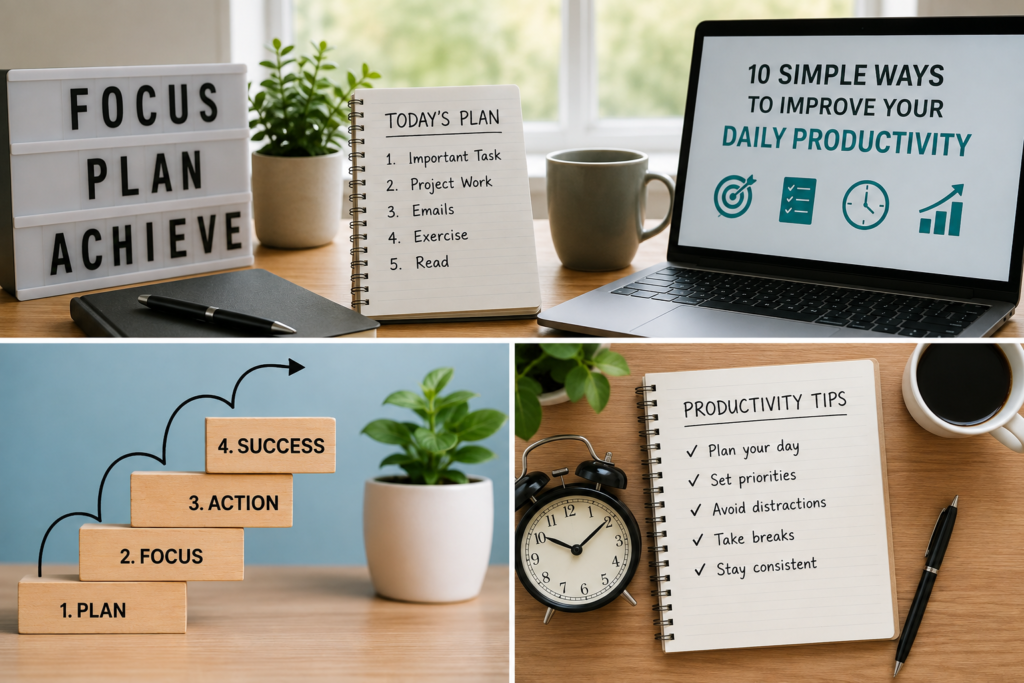
Start Your Day with a Plan
Taking just five to ten minutes each morning to plan your day can help you stay on track. Write down your most important tasks and prioritize them based on urgency and importance. A simple to-do list is often enough to provide direction and reduce decision fatigue.
Eliminate Common Distractions
Notifications, unnecessary meetings, and constant multitasking can interrupt your workflow. Consider turning off non-essential notifications and setting dedicated periods for focused work. Even short, uninterrupted work sessions can lead to better results.
Break Large Tasks into Smaller Steps
Large projects often feel overwhelming. Dividing them into smaller, manageable tasks makes them easier to complete and provides a sense of progress along the way. Celebrate small wins to stay motivated.
Example Task Breakdown
- Research the topic
- Create an outline
- Write the first draft
- Edit and proofread
- Publish and promote
Take Regular Breaks
Working continuously for hours can reduce concentration and creativity. Short breaks every hour allow your mind to reset and improve long-term focus. A quick walk, stretching, or simply stepping away from your desk can make a noticeable difference.
“Productivity is less about doing more and more about doing what matters most.”
Keep Your Workspace Organized
A clean workspace helps reduce distractions and creates a more pleasant working environment. Organize your files, remove unnecessary clutter, and keep essential tools within easy reach.
Track Your Progress
Review your accomplishments at the end of each week. Understanding what worked well and where you struggled allows you to improve your workflow over time.
Key Takeaways
- Plan your day before starting work.
- Focus on one task at a time.
- Minimize distractions whenever possible.
- Break complex work into smaller tasks.
- Take regular breaks to maintain focus.
- Review your progress consistently.
Frequently Asked Questions
How many tasks should I plan each day?
Most people benefit from focusing on three to five important tasks instead of creating an overwhelming list.
Is multitasking effective?
Research generally suggests that focusing on one task at a time produces better quality work and reduces mistakes.
How often should I review my goals?
A weekly review is usually enough for most individuals, while monthly reviews help evaluate long-term progress.
Thank you for reading! This sample article is intended for testing blog layouts, fonts, headings, lists, blockquotes, spacing, and overall website design. Feel free to replace this content with your own articles once your website is ready.